
Skip to content

Mime artist

Silent routines, made from three moves at a time

I'm Lucien. I am a mime artist, and I sell move cards, workbooks, written routines and two video courses.

One email every Sunday. Unsubscribe any time.

Man on a Marseille harbour wall at first light

The moves

The eight moves taught so far, and the routines each one turns up in.

Pick a piece to see what uses it

The slow walk Walking in place while the whole stage seems to move past in 6 routines. On the sheets

The invisible wall Hands that stop on air and make a flat surface feel solid in 5 routines. In the workbook

The chair Sitting down on nothing and trusting it to hold in 4 routines.

The wind A body that leans, pushes and gives way to something unseen in 5 routines.

The rope pull Hand over hand, with the weight showing in the shoulders in 3 routines. In the notes

The ladder Climbing rungs that are not there, one hand and one foot at a time in 1 routine. In the notes

The face change Six faces in two minutes, changed cleanly with one hand in 5 routines.

The box Four walls felt from inside, and no sign of the door in 1 routine.

The routines

Every routine is made from three moves. The first one named is the one it grows from.

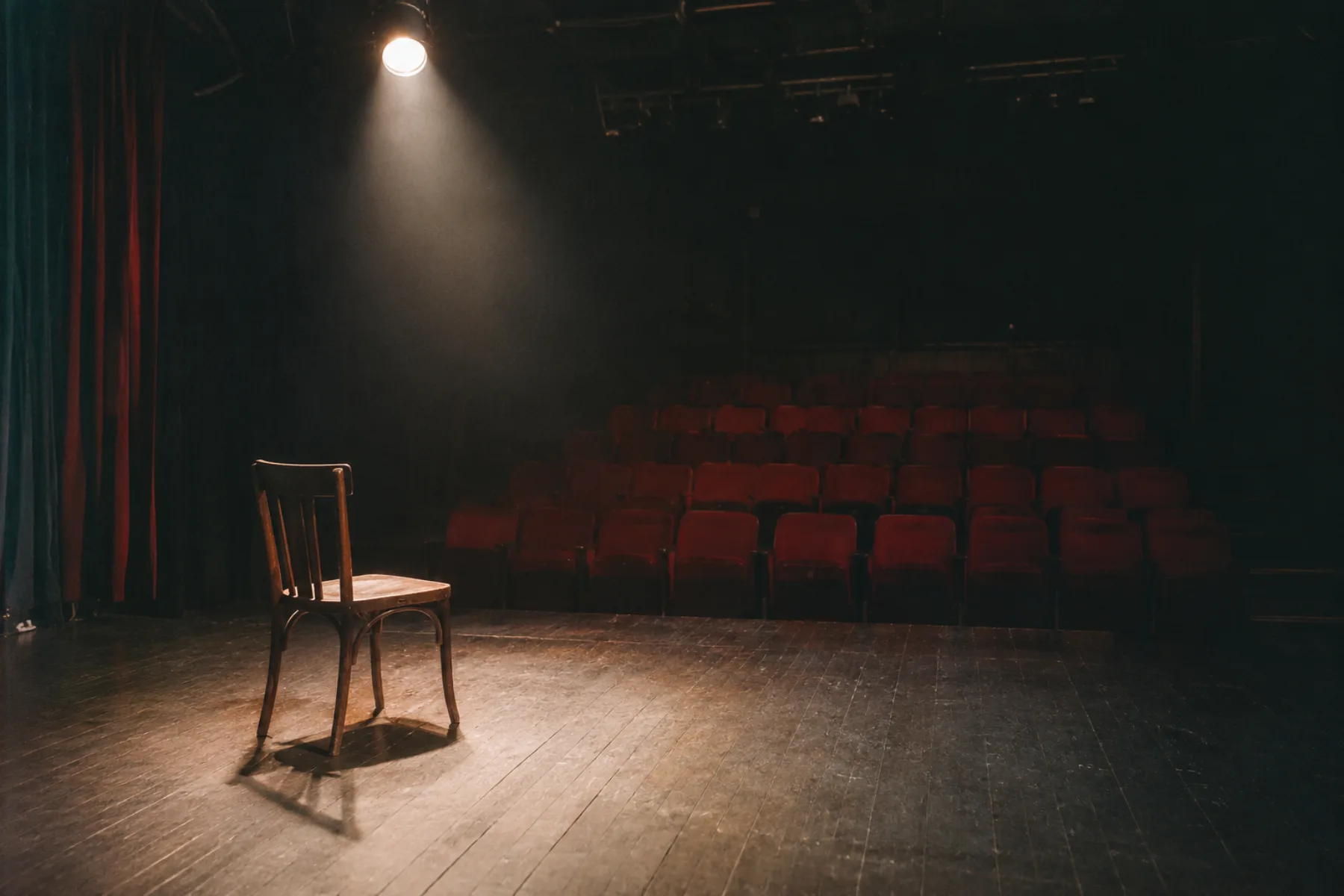
  1. Empty stage with one chair under a spotlight

    6 min

    The waiting room

    Uses the chair, the slow walk and the face change. A man waits for a news that does not come.

    • The chair (the root)
    • The slow walk
    • The face change
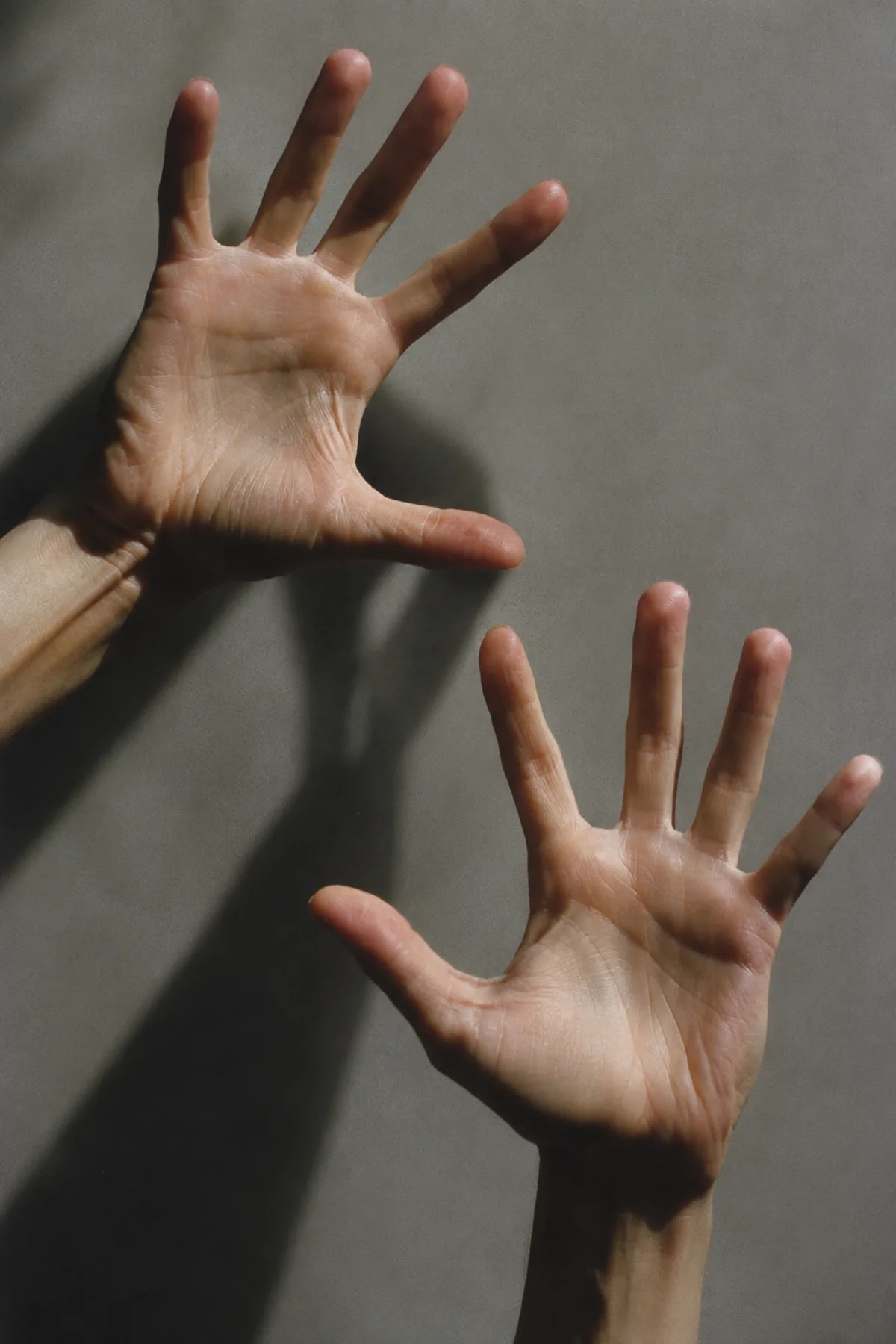
  2. Hands pressing against an invisible wall

    7 min

    The glass box

    Uses the wall, the box and the face change. A performer finds the walls of a small box and cannot find the door.

    • The invisible wall (the root)
    • The box
    • The face change
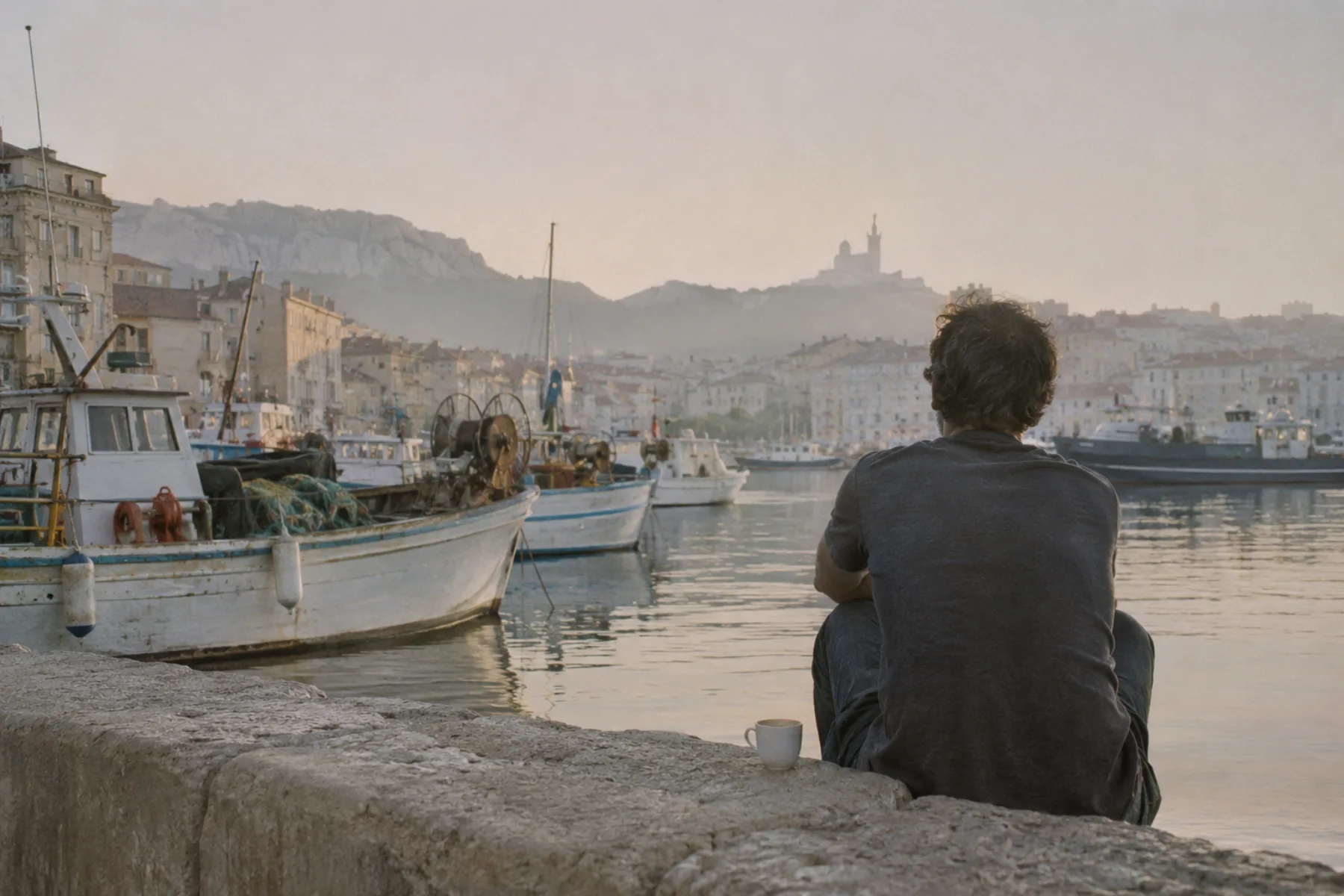
  3. Man on a Marseille harbour wall at first light

    8 min

    Hauling in the net

    Uses the rope pull, the slow walk and the wind. Work on a harbour, in silence.

    • The rope pull (the root)
    • The slow walk
    • The wind
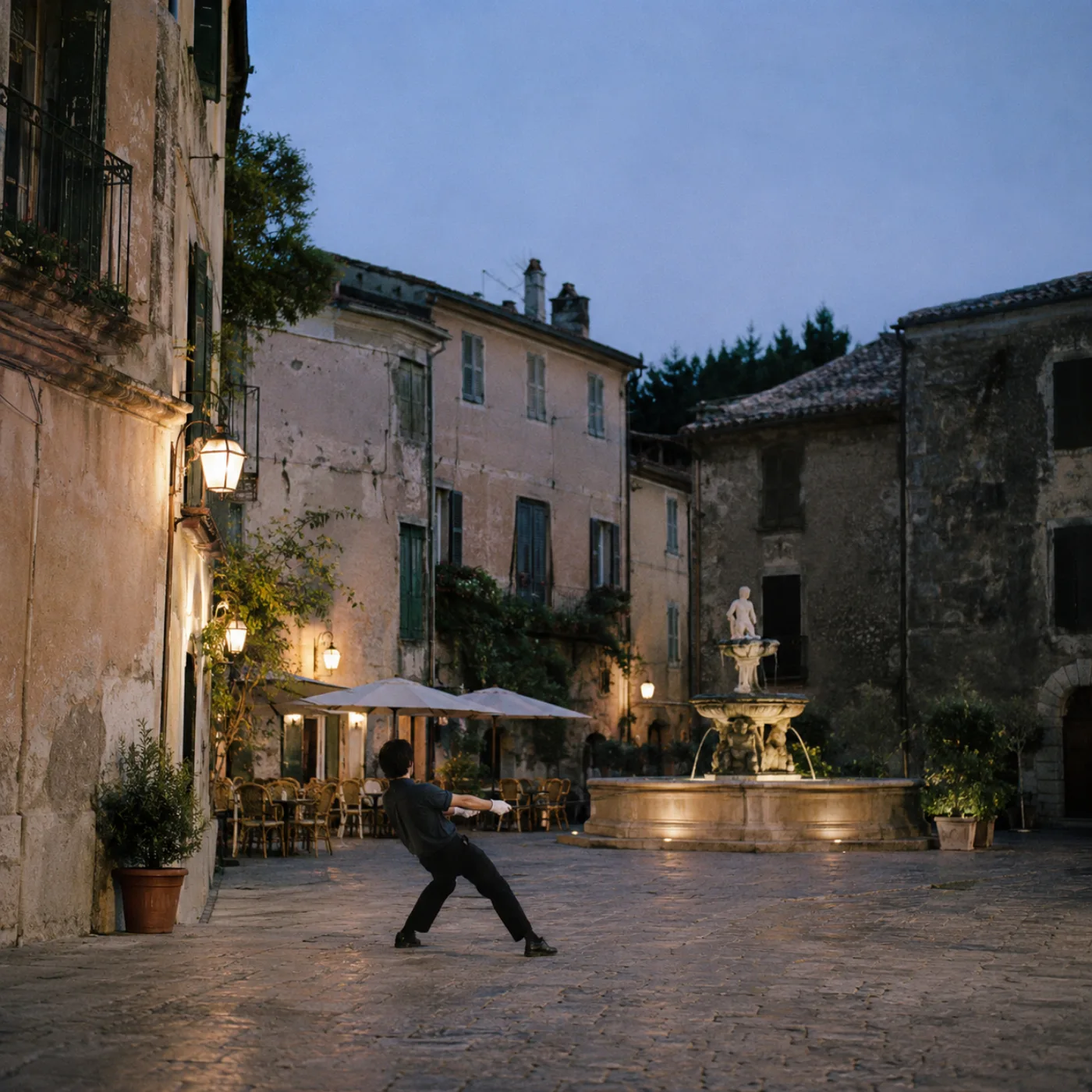
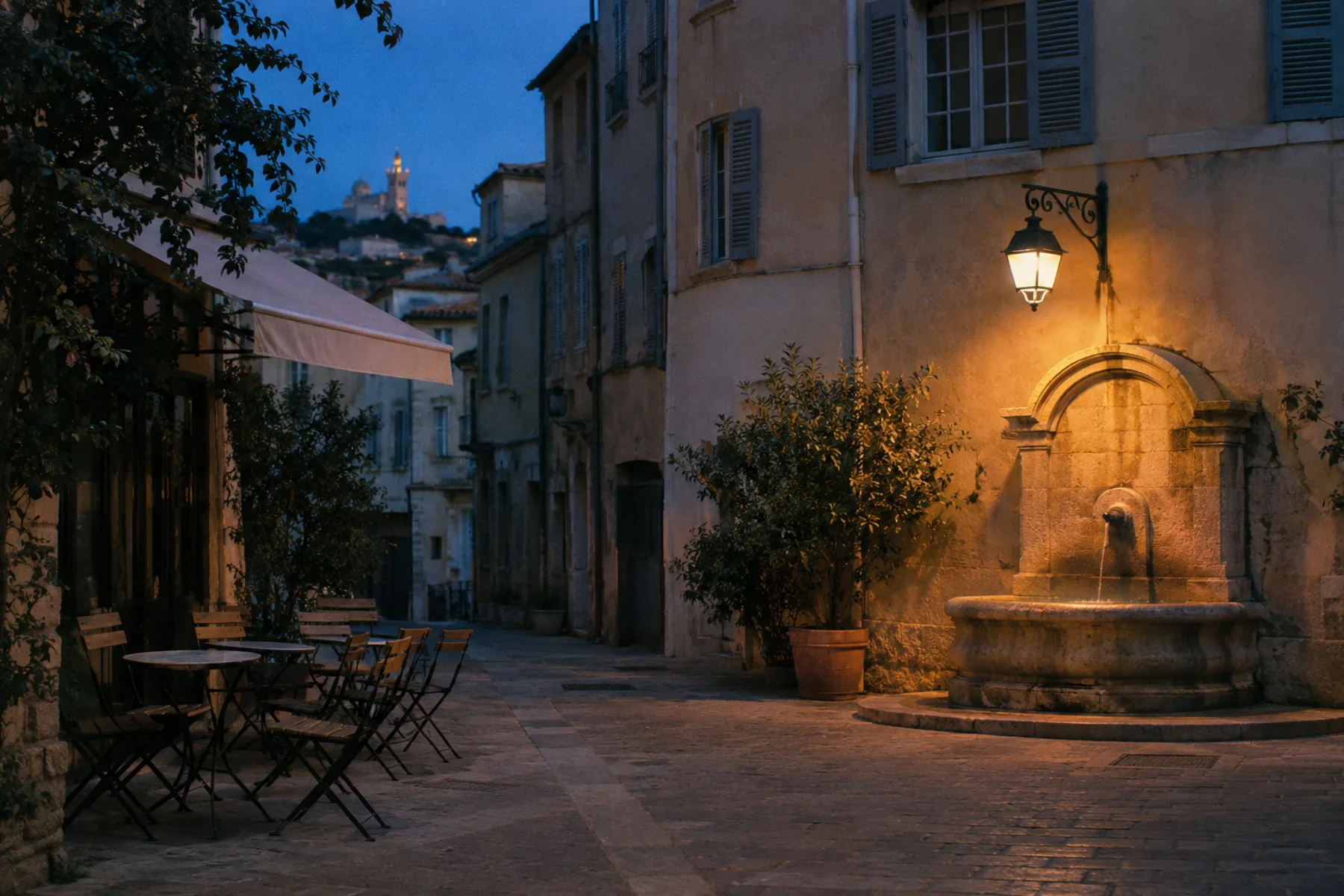
  4. Quiet old-town square at night with a stone fountain

    7 min

    The ladder in the square

    Uses the ladder, the wind and the wall. A climb in a square at night, and a wind at the top.

    • The ladder (the root)
    • The wind
    • The invisible wall
  5. Sketching stick figures in a notebook on a tram

    6 min

    A morning on the harbour wall

    Uses the slow walk, the wind and the chair. An early walk, a short rest and a long look at the water.

    • The slow walk (the root)
    • The wind
    • The chair
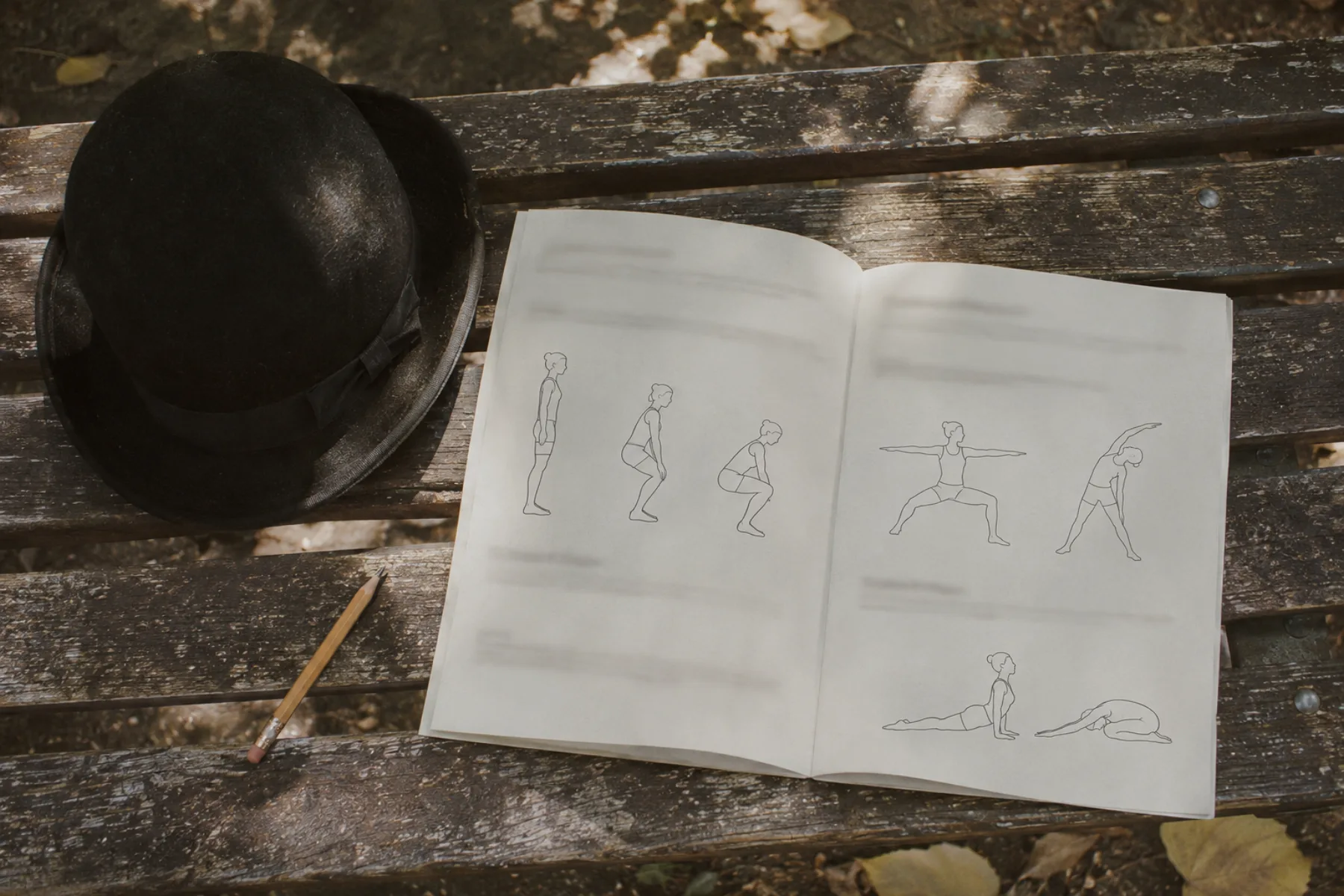
  6. Open movement workbook beside a black bowler hat

    7 min

    The man who lost his hat

    Uses the face change, the chair and the slow walk. A search that ends where it began.

    • The face change (the root)
    • The chair
    • The slow walk
  7. Sketching stick figures in a notebook on a tram

    6 min

    Walking into the wind, slowly

    Uses the wind, the slow walk and the wall. The hardest walk in the book, taken in small pieces.

    • The wind (the root)
    • The slow walk
    • The invisible wall
  8. Striped shutter light on a rehearsal room floor

    8 min

    The wall that was not there

    Uses the wall, the face change and the rope pull. A routine about leaning on something and finding it gone.

    • The invisible wall (the root)
    • The face change
    • The rope pull
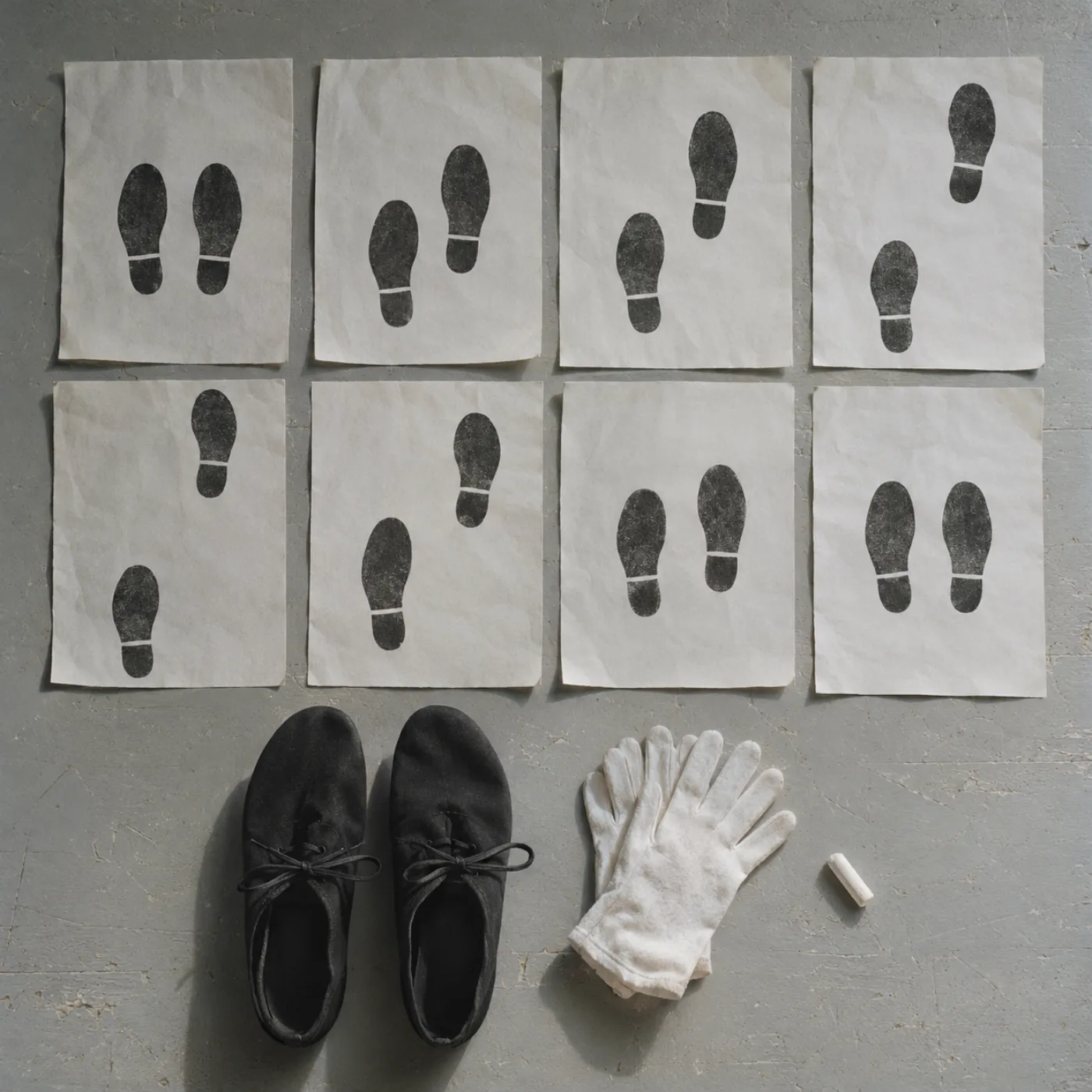
  9. Black shoes, white gloves and face powder on a bench

    5 min

    Putting on a face in front of a mirror

    Uses the face change, the chair and the wind. Six faces in two minutes, and what it takes to change them cleanly.

    • The face change (the root)
    • The chair
    • The wind
  10. Empty stage with one chair under a spotlight

    9 min

    My first routine, with three moves

    Uses the slow walk, the wall and the rope pull. The routine that taught me to count.

    • The slow walk (the root)
    • The invisible wall
    • The rope pull

Newsletter

Latest routines

A new silent routine every Sunday, each one made from three moves.

  • The waiting room

    Uses the chair, the slow walk and the face change. A man waits for a news that does not come.

    Nov 8, 2026 · 6 min read

  • The glass box

    Uses the wall, the box and the face change. A performer finds the walls of a small box and cannot find the door.

    Nov 1, 2026 · 7 min read

  • Hauling in the net

    Uses the rope pull, the slow walk and the wind. Work on a harbour, in silence.

    Oct 25, 2026 · 8 min read

Online course

My course

Downloads, a course and merch

Shop

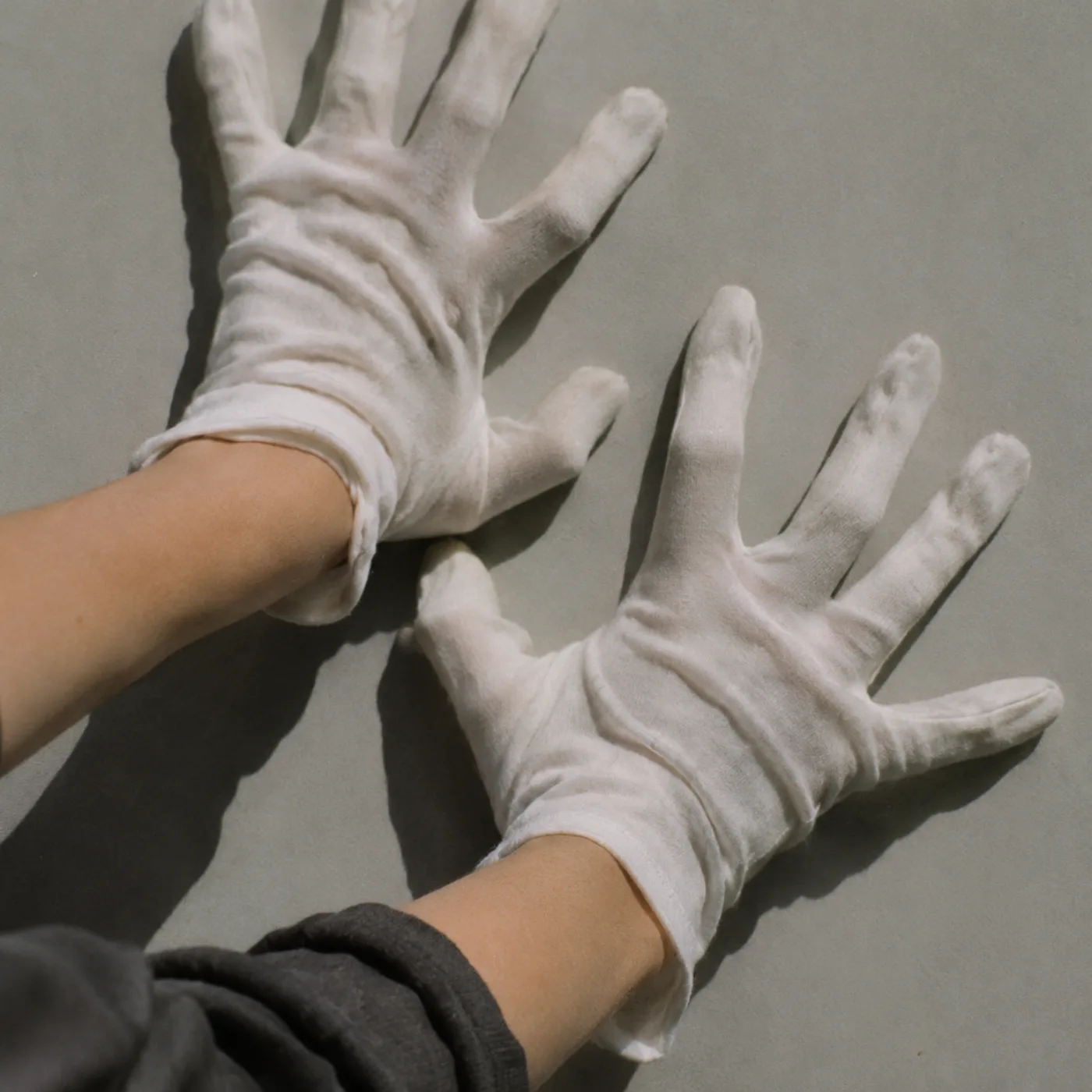
Hands pressing against an invisible wall

About

About me

I have worked as a mime artist since 2008. I perform in squares, on small stages and in rehearsal rooms with striped light on the floor, and I teach what I have learned to people who have never stood on a stage. Most of my students are adults who love the idea of telling a story without words and are afraid of looking foolish. I tell them that looking foolish is part of the work.

Every Sunday I write a short letter with one routine made from three moves. The moves repeat from week to week, so you can watch the same chair, wall or walk turn into a different piece each time. Over a year you learn a small vocabulary and see how it grows.

What I sell is what I use: cards for every move, workbooks on the wall, the rope and the ladder, written routines and two courses. I do not give lessons or perform at your event. I teach you to practise well on your own, in a rehearsal room or in your kitchen.

Questions

How do the downloads arrive?

After checkout you receive an email with a download link, and the same link is shown on the confirmation page. Every file is a PDF made to print on ordinary A4 or Letter paper.

How do the video courses work?

You pay once and the lessons appear in your account straight away. Watch them in order or jump around, as often as you like, on a phone, a tablet or a laptop.

Is there merch?

Yes: tees, totes, mugs, prints and stickers with my own designs. Each is printed to order and shipped to you, and the cost and delivery time show at checkout.

Do I have to be good at acting or dance?

No. Most of my students are neither. The first lessons are standing still and walking slowly, and they go from there. If you can count to four and look in a mirror, you can begin.